If you are selling a digital product, this blog is strongly recommended for you. And if you are a physical business owner, it will help you too.
We all know about design. But here is the problem. We see the design part as a small part of the total workflow, when design is actually the major part of your business. Whether you are selling a digital product or a physical product, design is the most important part, because your product and your product’s usability depend on design.
For example, if you are selling digital products, the UI and the UX is the major part of your product. But design is not about just looking great. It’s all about the experience. How rich, how great is the experience you are giving your customer? This is the important part. And we all get stuck on that.
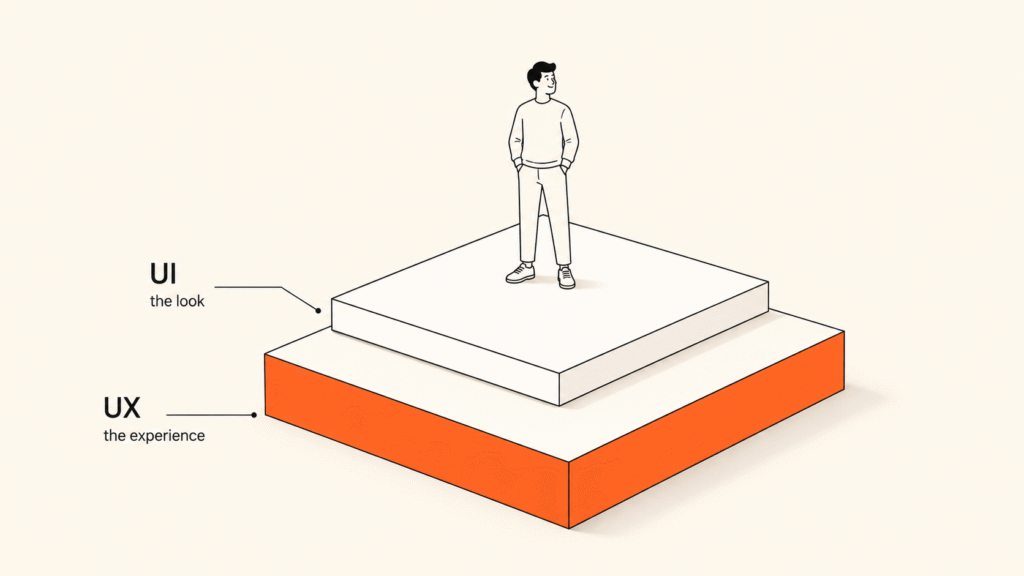
Design is not a small step, it is the whole product
Let’s talk about digital products. You are making a digital product, and you don’t know who your targeted audience is, whom you want to sell to, or how the experience should be.
Okay, let’s think you know everything. You know your audience, you know whom you want to sell to. But still, you need a UX designer. Someone who will actually make your product usable for the users, who will discover the user pain points, and give the easiest solution.
That is not decoration. That is the product. A product can look beautiful and still be a bad product, because it confuses people. And a plain product that feels easy can win. The look is the smallest part. The experience is everything.
The real bottleneck is your workflow, not your team
Now here is the part nobody wants to say out loud.
If your marketers only see a feature after it’s built, and your frontend developers only see designs after they’re finalized, your workflow isn’t just slow, it’s burning revenue.
High-growth digital product companies don’t pass static files down a conveyor belt. They align product design, conversion design, code, and positioning from day one.
Why? Because design sticks to business like glue. If your team works in silos, your product will feel clunky and disconnected to the real user. Your designers can be great, your developers can be great, and you can still ship a mess, because the process makes them work blind to each other.
The worst team setup: the Assembly Line Waterfall
Most companies run design like a relay race. The work gets handed down a line, one department at a time. In software this has a name, the Siloed Functional Hand-off Chain. It looks like this:
Product Designer → Developer → Web Designer → Marketer → Frontend (Pixel UI) → (Backend) → (Marketing UI) → (Copy and ads) → (Final code)
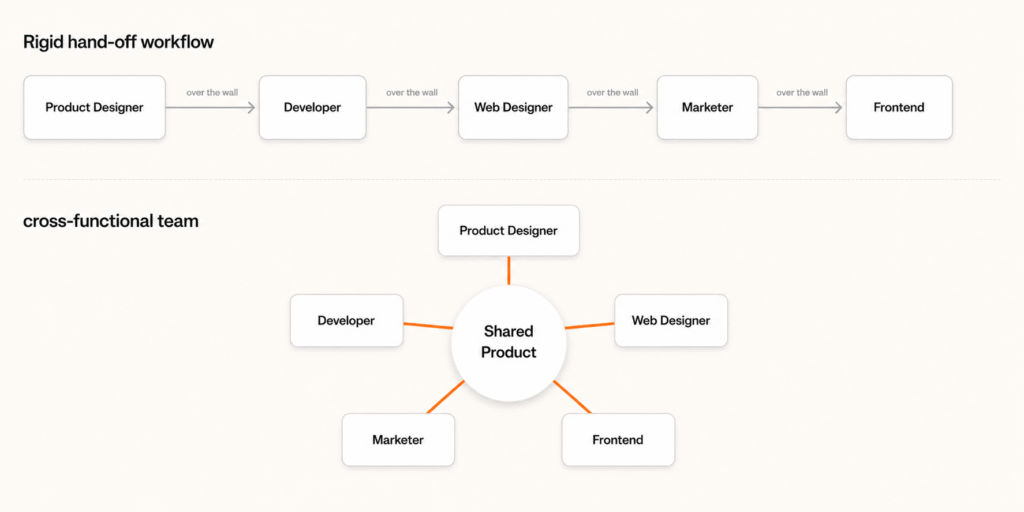
Everyone does their part, then throws it over the wall to the next person. It feels organized. But it is actually the bottleneck. Here is why.
Silos kill conversion and speed
When marketers try to sell after the code is written, and frontend developers code after the web designers hand off static screens, you get stuck with expensive rework and slow shipping. And your marketers end up forced to sell whatever got built, instead of helping define what users actually want to buy. You built the wrong thing fast, and now you are paying to fix it.
Separation of outcomes, not isolation
Here is a nuance most teams miss. Product design and marketing design are not the same job. Product design is focused on retention and usability. Web and marketing design is focused on acquisition and conversion. They solve two entirely different business problems.
So they shouldn’t be isolated design-ticket departments that never talk. Separate the outcomes, not the people. They need to sit directly inside cross-functional teams, next to engineering and marketing.
Conway’s Law in action
There is an old rule that explains all of this. Conway’s Law, from Melvin Conway back in his 1968 paper:
“Any organization that designs a system (defined broadly) will produce a design whose structure is a copy of the organization’s communication structure.” – Melvin Conway
Read that again, because it is the whole blog in one line. Your digital product will always mirror how your team communicates. So a fragmented, sequential workflow always leads to a clunky customer experience. The seams in your team show up as seams in your product.
How real companies win: the cross-functional design team
So what actually fixes it?
The bottleneck isn’t having separate design teams, and it isn’t having one combined team either. The real bottleneck is treating design as a middle step that gets handed work after all the big decisions are already made.
Whether you have one multi-skilled designer or specialized product and web designers, they must sit inside cross-functional units, alongside engineering and marketing, from day one. Not after the feature is scoped. From the first conversation.
And this is not just my opinion. McKinsey studied 300 companies for five years and found the top design performers grew their revenue about 32 points faster than their rivals, and breaking down silos was a big reason. Steve Jobs said it shorter:
“Design is not just what it looks like and feels like. Design is how it works.” – Steve Jobs
Design is how it works. And how it works depends on how your team works together.
Why this matters for your business
Now let me talk straight to the founders, the CEOs, and the product managers. This splits into two worlds.
1. Physical product or business
For a physical product or a shop, design is the full journey, not just the item. Make the product obvious on the first try, so nobody needs a manual. And design the buying path too, the shelf, the packaging, the store layout, the checkout, the unboxing. Every point of friction between your product and your customer is a lost sale. When the experience feels smooth, people trust you, they buy again, and they tell their friends. In the physical world, good design feels like good service, even when no staff is standing there.
2. Digital product or business
For a website, an app, or a SaaS, this is life or death for your conversion. Bring design, code, and marketing into the same room from day one. Cut the steps, remove every extra click and field, make it fast and mobile-first. And don’t guess where people struggle. Watch the real behavior with tools like Microsoft Clarity, and fix the exact spots where they rage-click or give up. In my own work, starting from the real user instead of the look has lifted conversions by around 35 percent on the pages I revamp. Same traffic, same product, more sales. The only thing that changed was the experience, and who was in the room when it got designed.
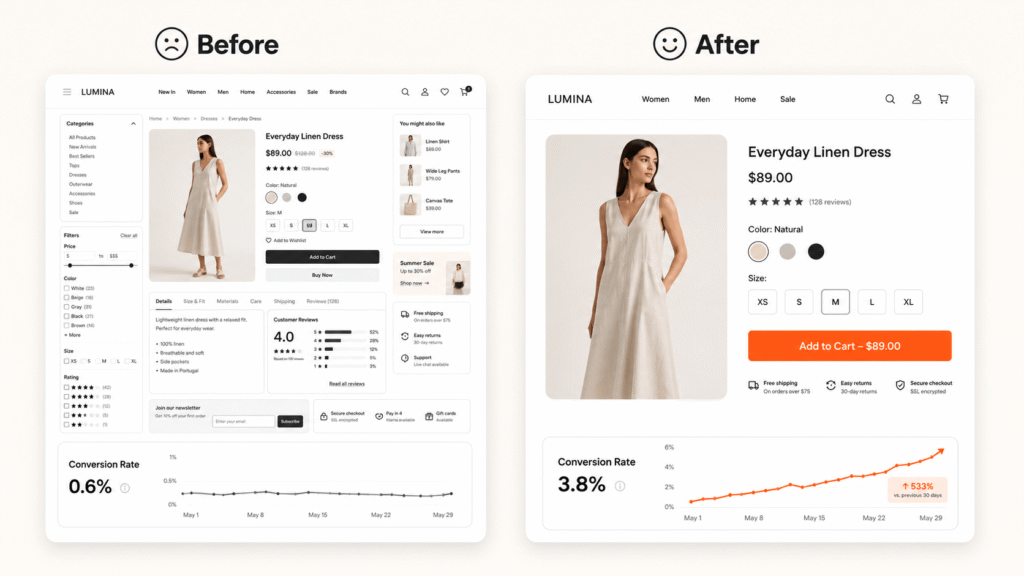
Stop running a relay race
So here is the takeaway. Design is not the pretty step at the end. It is the major part of your business, and your workflow is either protecting it or killing it.
If you want to ship fast and grow your business, stop running a relay race with your team. Stop handing design down a line after the big calls are made. Align design, code, and marketing from the very beginning. Your product will mirror your team, so build the team you want your product to feel like.
Frequently asked questions
Because most teams treat design as a middle step, handed work after the big decisions are made. Work moves down a line in silos, which causes rework, slow shipping, and a disconnected product.
It is a team where designers sit alongside engineering and marketing from day one, instead of a separate design department that only receives tickets. They shape the product together, not in sequence.
Conway’s Law says your product mirrors how your team communicates. A fragmented, siloed team produces a fragmented, clunky product. Fix the team structure, and the product experience improves with it.
References
The key facts are linked inline above. For anyone who wants to check the main ones: